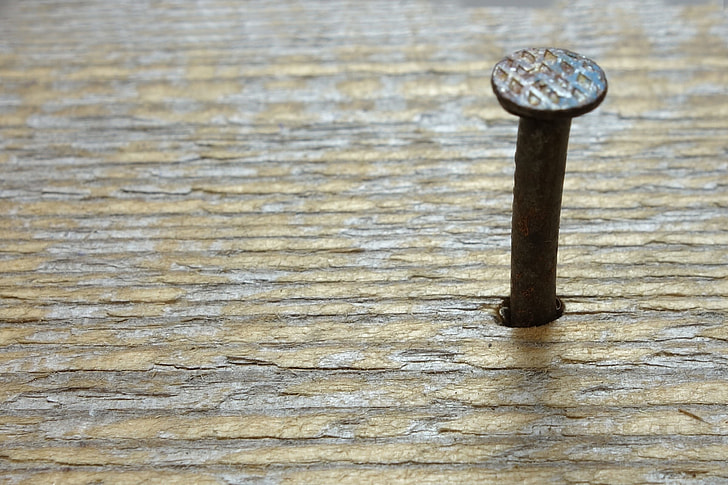
Nailing a pin to a wooden surface you may think that it’s a very easy “thing” , which even a baby can do , but that’s not quite accurate . Everything in our “wooden planet” has it’s own “secrets” and needs care and attention from us .
Even if you are a total woodworking beginner or a more advanced one , you’re always learning new methods and ways to do your wooden project .
Nailing a pin to a wooden surface isn’t so easy as many may think .
If you hurry and try to nail it to a very hard wood piece , without the proper attention , you probably will bent the pin or nail it in a wrong direction .
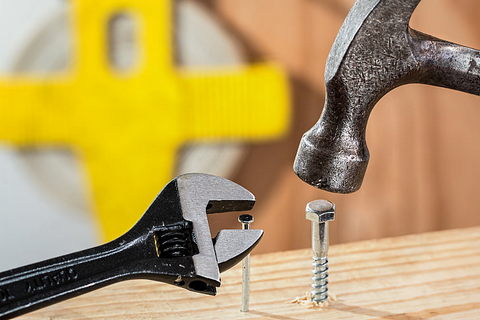
Nailing a pin to a Wooden Surface , needs Confidence .

At first you should put the pin in the exact spot you want , with the exact direction you want to be pegged .
After that you give a small hit to the “head” of the pin with your hammer , just to stailize the pin . Then you hit strongly the pin with your hammer using the exact ( as possible) center of the hammer , to the direction you want .
After the stabilization of the pin , try to hit hard with the center of your hammer till the “end of the road” , but with as fewest hits you can !!!!!
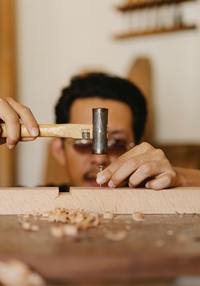
That’s why you hit hard but with high focus . You don’t want your pin to go to the wrong direction , or inflect .
Give to the pin strong , “confident” and the fewest appropriate hits , to get the “job” done . If you give your pin many uncertain and unconfident hits the possibilities to inflect it , or go to a wrong direction , are getting high .
How to Avoid splitting wood when nailing ?
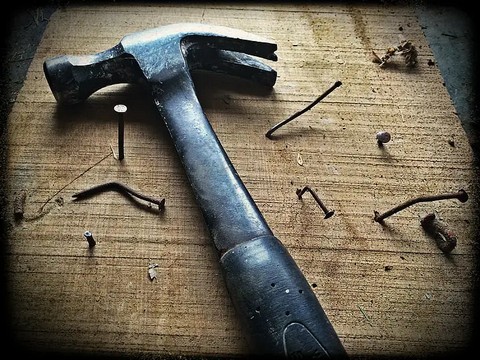
Take your pin and hit its “nose”- point with a hammer to make it flat – blunt and less sharp and edgy .
By doing this when you’ll nail your pin , the pin will penetrate the wooden surface , pushing down the wood’s fibers , so the wooden piece won’t create cracks .
If you don’t want to hit the pin , take a cutter and cut completely the “nose” of the nail , to make it flat . Then nail it to your wood and you’ll see that even if you nail very close to the end of the wood , the wood edge will not get any cracks .
I’m sure that you’ve experienced the very annoying situation , of making a wooden project and when you’re about to come to the end , you have a final nailing of a pin .
You have done the nailing , and you’re about to admire your wooden “masterpiece” but the edge cracks from the edge nailing , “demolishing” your woodworking project for good .
Do nails Crack wood ?
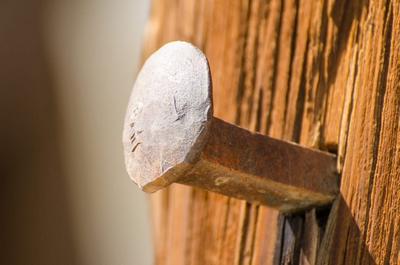
Yes , if you have very big nails with thick points to nail near the edges of boards or whatever , if you have too many big and therefore inappropriate nails to nail near the edges and if you nails are very closely one to the other in a straight line , splitting and hurting the grain .
Will Brad nails split wood ?
No there are more safe than other , to nail them into all the wood types and densities and mostly if you have a thin or a super thin piece of wood , because they seperate the fibers of wood more smoothly while it penetrates inside .
Why do Sharp nails split wood ?
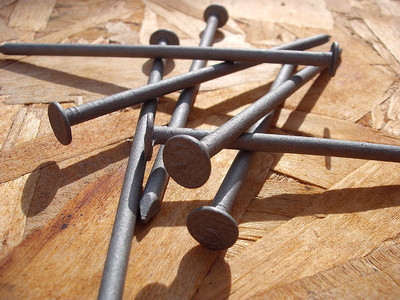
The sharp types of nails split wood more easily than other , because they penetrate into the mass of wood cutting the fibers brutally and not seperate them smoothly , opening their way – path inside it .
What nail has Design that prevents the splitting of wood fibers ?
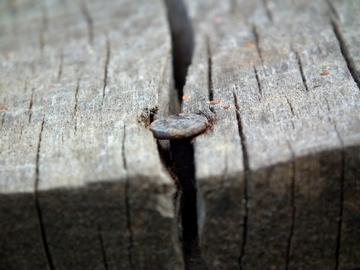
You should choose nails design with blunt points , in order to penetrate inside more smoothly seperating the fibers with less aggresive force .
Enjoy your life , and give yourself “tons” of happiness through woodworking activity .